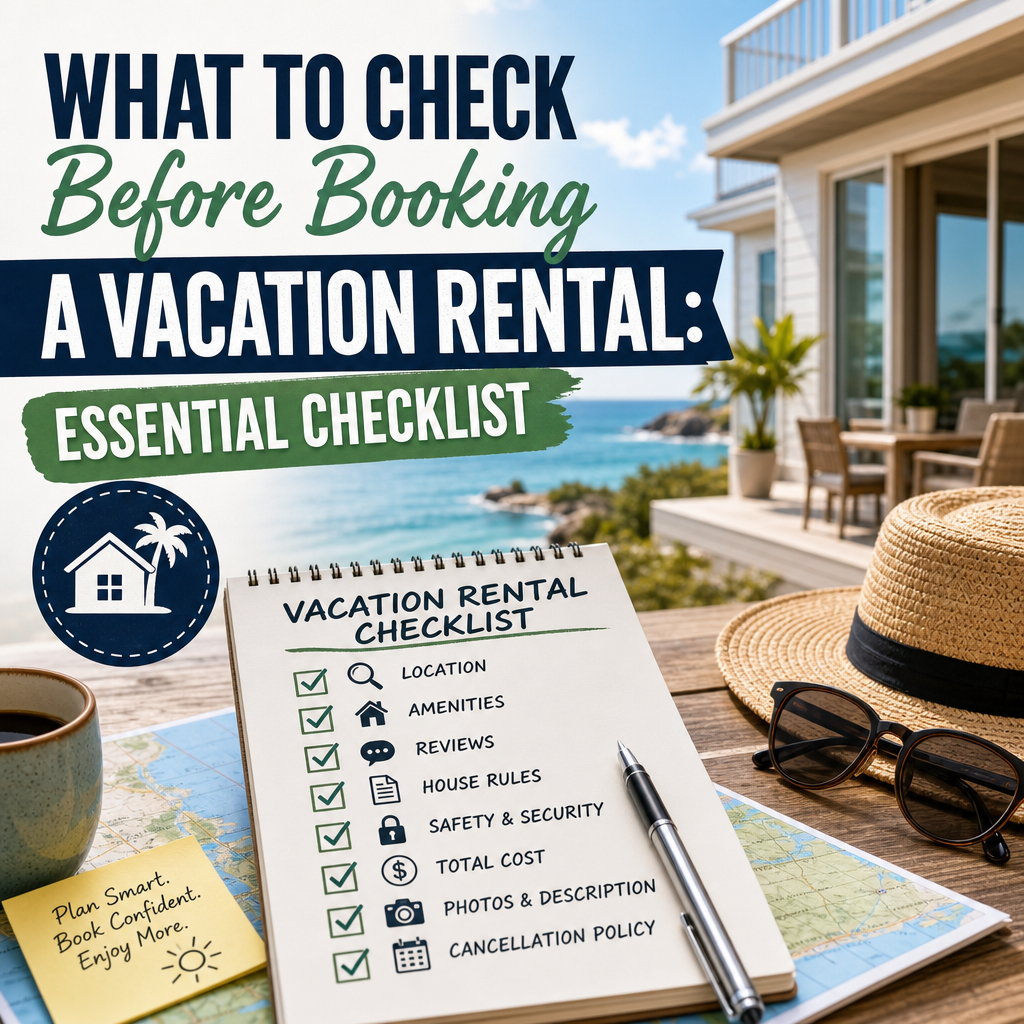
What to Check Before Booking a Vacation Rental
Vacation rentals can offer more space, privacy, and flexibility than hotels, but they also require a little more homework. A great listing in the wrong location, with surprise fees or a confusing setup, can turn a relaxing trip into a frustrating one. The good news is that a quick checklist can help you avoid common mistakes and book with confidence.
Use the guide below to evaluate vacation rentals before you reserve. Whether you’re traveling solo, with family, for work, or with a group of friends, these checks can help you find a place that truly fits your trip.
1. Check the Location Carefully
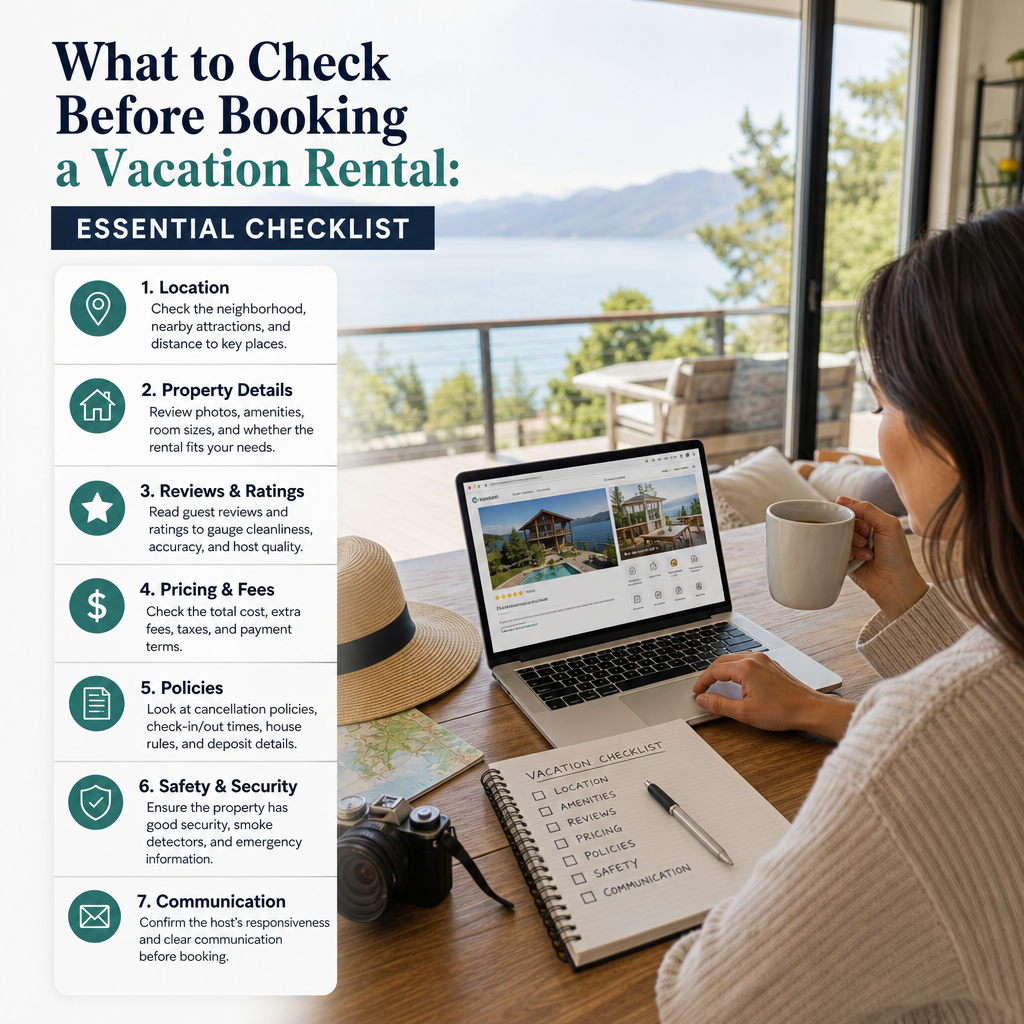
A vacation rental can look perfect online and still be a poor match if the location is inconvenient. Start by thinking about what matters most to your trip.
Ask yourself:
- How close is the rental to the places you plan to visit?
- Will you need a car, rideshare, public transit, or can you walk?
- Is the neighborhood quiet, lively, or somewhere in between?
- Are there grocery stores, pharmacies, restaurants, or attractions nearby?
Look beyond the map pin
A listing may appear “near downtown,” but that could still mean a 20-minute drive or a walk through an area that feels unsafe at night. Read the listing description, scan reviews, and check the exact street area on a map if possible.
Match the location to your travel style
For example:
- Family trip: A quiet residential area may be better than a nightlife district.
- Business travel: Being close to meeting venues or transit may matter more than scenic views.
- Beach vacation: Easy access to the shore may be more valuable than a bigger living room.
If you’re comparing multiple properties, tools like StayMatch can help evaluate listings against your personal criteria so you can quickly see which ones fit your location needs best.
2. Calculate the Total Price, Not Just the Nightly Rate
One of the biggest booking mistakes is focusing only on the nightly price. The final cost can be much higher once you add fees and taxes.
Check for these common charges:
- Cleaning fees
- Service fees
- Occupancy taxes
- Extra guest fees
- Pet fees
- Resort or community fees
- Security deposit requirements
Compare the total, not the headline price
A rental that looks cheaper at first may end up costing more than a higher-priced listing with fewer add-ons. Always review the full booking summary before committing.
Watch for minimum stay rules
Sometimes a property has a low nightly rate but requires a long minimum stay, which can make it less practical for short trips. Others may price weekends much higher than weekdays.
Example
A rental listed at $180 per night might seem like a better deal than one at $210. But if the first one adds a $120 cleaning fee and a $70 service fee, the second one could actually be the more affordable option.
3. Read Reviews with a Critical Eye
Reviews are one of the most useful tools for checking whether a vacation rental matches its description. They can reveal things that photos and listing copy don’t.
Look for patterns, not just star ratings
A single negative review may not mean much. Repeated comments about noise, poor cleanliness, or misleading photos are more important.
Pay attention to these details:
- Accuracy of the listing
- Cleanliness
- Noise levels
- Bed comfort
- Wi-Fi reliability
- Check-in process
- Host communication
- Maintenance issues
Read recent reviews first
A property may have improved—or worsened—over time. Focus on the most recent feedback to understand the current condition of the rental.
Watch for vague praise
Comments like “Great stay!” are nice, but specific reviews are more useful. A guest saying, “The kitchen had everything we needed for cooking breakfast and the Wi-Fi worked well for video calls,” tells you much more.
4. Evaluate Host Responsiveness and Communication
The host’s communication style can make a big difference in your experience, especially if something goes wrong before or during your stay.
Before booking, notice:
- How quickly the host replies to questions
- Whether they answer clearly and completely
- If they seem professional and helpful
- Whether they provide detailed check-in instructions
Why responsiveness matters
A responsive host can help with late arrivals, missing keys, appliance problems, or local recommendations. If a listing takes days to get a reply before booking, that may be a warning sign for later.
Good signs include:
- Clear house rules
- Fast answers to pre-booking questions
- Detailed arrival instructions
- A helpful tone, not just canned responses
If you’re unsure about a listing, ask one or two practical questions before booking. For example:
- “Is the Wi-Fi strong enough for video calls?”
- “Is parking included or street-only?”
- “Are all bedrooms on the same floor?”
The quality of the reply can tell you a lot.
5. Understand the Cancellation Policy
Travel plans change. Flights get delayed, work schedules shift, and emergencies happen. A flexible cancellation policy can save you from losing money if your plans change.
Review the policy terms carefully
Look for:
- Free cancellation deadlines
- Partial refund windows
- Non-refundable booking terms
- Rules for canceling due to emergencies or weather
- Host-specific exceptions
Match the policy to your trip risk
If your plans are uncertain, a more flexible policy may be worth paying extra for. If your trip is fully locked in, a stricter policy might be acceptable.
Example
If you’re booking months in advance for a wedding or conference, a flexible policy gives you protection in case the event date changes. If you’re booking a last-minute weekend getaway, you may be comfortable with a firmer policy if the total price is lower.
6. Confirm Sleeping Arrangements
Sleeping setup can make or break a trip, especially if you’re traveling with family, friends, or multiple couples. Don’t assume the listing photos or title tell the whole story.
Check the details:
- How many bedrooms are there?
- What size are the beds?
- Are there sofa beds, bunk beds, or trundle beds?
- Is there privacy between sleeping spaces?
- Are any guests expected to sleep in common areas?
Ask who the sleeping setup works for
A “two-bedroom” rental might sound ideal, but if one bedroom has twin beds and the other is a pull-out couch, it may not work for two couples. Similarly, a loft-style sleeping arrangement may be fine for a group of friends but not for parents traveling with small children.
Important questions to ask:
- Are all beds in private rooms?
- Are sheets, blankets, and pillows provided for every sleeping area?
- Are cribs, pack-and-plays, or extra bedding available?
Comfort starts with the right sleep setup, so don’t skip this step.
7. Check the Work Setup if You Need to Work Remotely
Many travelers now mix vacation with remote work. If you need to answer emails, join video calls, or do focused work, the rental should support that.
Make sure the property has:
- Reliable high-speed Wi-Fi
- A desk or table with enough space
- A comfortable chair
- Good lighting
- Enough electrical outlets
Think about noise and privacy
A beautiful open-plan living room may not be ideal for work if other guests are watching TV or moving around constantly. If you need quiet, look for a separate workspace or a listing specifically mentioning remote-work friendly features.
Example
Someone working from a rental for three days may need stable internet and a private corner for calls. A couple on vacation who only needs to check messages might be fine with a kitchen table and decent Wi-Fi. Be honest about your needs before you book.
8. Review Kitchen and Laundry Amenities
Kitchen and laundry access can save money and make longer stays much easier, but the level of equipment varies widely.
Kitchen checklist:
- Full-size refrigerator
- Stove or cooktop
- Oven or microwave
- Coffee maker or kettle
- Pots, pans, dishes, and utensils
- Dishwasher
- Basic supplies like dish soap and sponges
Laundry checklist:
- Washer and dryer in the unit or shared
- Detergent provided or available nearby
- Iron and ironing board
- Drying rack if needed
Why this matters
For a weekend trip, you may only need a mini-fridge and coffee maker. For a week-long family stay, a full kitchen can save time and restaurant expenses. For longer stays, laundry access is especially helpful if you’re traveling light.
Don’t assume “fully equipped”
That phrase can mean different things from one host to another. If cooking is important to you, check the photos and listing description closely, or message the host for confirmation.
9. Confirm Parking Options
Parking is easy to overlook until you arrive and realize it’s expensive, limited, or unavailable. If you’re driving, this should be one of your first checks.
Find out:
- Is parking included?
- Is it private, covered, or street parking?
- Is a permit required?
- Is there a height limit for garages?
- Is parking guaranteed or first come, first served?
Urban vs. suburban realities
In cities, parking can be one of the biggest hidden costs. A listing with “free parking” may still require a long walk, tight street parking, or a permit. In suburban or rural areas, parking is usually easier, but you should still confirm the number of spaces available.
Example
If two adults are arriving in one car and planning day trips, one secure parking spot may be enough. But if you’re hosting a multi-car group or planning to come and go often, parking needs become much more important.
10. Check Accessibility Features
If anyone in your group has mobility concerns, accessibility should be reviewed carefully. Even if you don’t need fully accessible design, small details can affect comfort and safety.
Look for:
- Step-free entry
- Elevator access
- Ground-floor bedrooms or bathrooms
- Wide doorways and hallways
- Walk-in shower or grab bars
- Accessible parking
- Low stairs or ramps
Don’t rely on assumptions
A “first-floor unit” may still require stairs to reach the building entrance. A photo of a stylish bathroom may not show whether the shower has a step-in lip. Ask for specifics if accessibility matters to your stay.
Good practice
Request exact details from the host, and if possible, verify the layout in photos or floor plans. If the rental must meet strict needs, don’t settle for vague promises.
11. Read Pet Rules Carefully
Traveling with a pet adds another layer of planning. Some rentals welcome pets enthusiastically, while others allow them only under specific conditions.
Check for:
- Whether pets are allowed at all
- Breed, size, or number restrictions
- Pet fees or deposits
- Rules about furniture or beds
- Yard access and fencing
- Nearby pet-friendly walking areas
Be clear about your pet’s needs
A listing might allow pets, but that doesn’t mean it’s a good fit for a large dog, a nervous cat, or multiple animals. If your pet needs space to exercise, a tiny apartment in the city may be stressful for everyone.
Example
A host may allow one small dog for a fee, but require the pet to stay off furniture and never be left alone in the unit. If that doesn’t work for your routine, keep looking.
12. Consider Whether the Neighborhood Fits Your Trip
The best rental in the wrong neighborhood can still lead to a disappointing stay. Think about the overall atmosphere you want.
Neighborhood fit depends on your plans:
- Nightlife trip: You may want a lively area close to bars and restaurants.
- Family vacation: A calmer neighborhood with parks and grocery stores may be better.
- Relaxing getaway: Scenic, quiet, or residential areas may be ideal.
- Business trip: Easy access to transit or conference centers may matter most.
Check for practical details:
- Noise levels at night
- Walkability
- Safety and lighting
- Nearby amenities
- Traffic during peak hours
Read between the lines in reviews
Guests often mention neighborhood issues without making them obvious. Comments like “Great location but loud on weekends” or “Easy walk to everything” can help you decide if the area fits your style.
13. Use a Personal Criteria Checklist Before You Book
When you’re comparing several rentals, it helps to create a short list of non-negotiables and preferences. This keeps you from getting distracted by pretty photos or a tempting discount.
Example checklist:
- Close to the places I need to visit
- Total price fits my budget
- Strong recent reviews
- Host replies quickly
- Flexible cancellation policy
- Comfortable sleeping setup for my group
- Reliable Wi-Fi and workspace
- Kitchen and laundry included
- Parking available
- Accessible enough for my needs
- Pet-friendly if needed
- Neighborhood matches my travel style
A tool like StayMatch can help you compare listings against these kinds of personal criteria, making it easier to spot which rentals are genuinely worth booking.
Conclusion
Booking a vacation rental is easier when you know what to check before clicking “reserve.” Focus on the essentials: location, total price, reviews, host communication, cancellation terms, sleeping arrangements, work setup, kitchen and laundry access, parking, accessibility, pet rules, and neighborhood fit. A few extra minutes of review can prevent costly surprises and lead to a much better stay.
The best rental is not just the prettiest one—it’s the one that matches your needs, budget, and travel style.